
Waterfront buying guide
What to check before buying waterfront on Lake Norman: Duke Energy dock permits, deeded vs. shared slips, flood zones, wells, septic and insurance.
Does a dock come with the house?
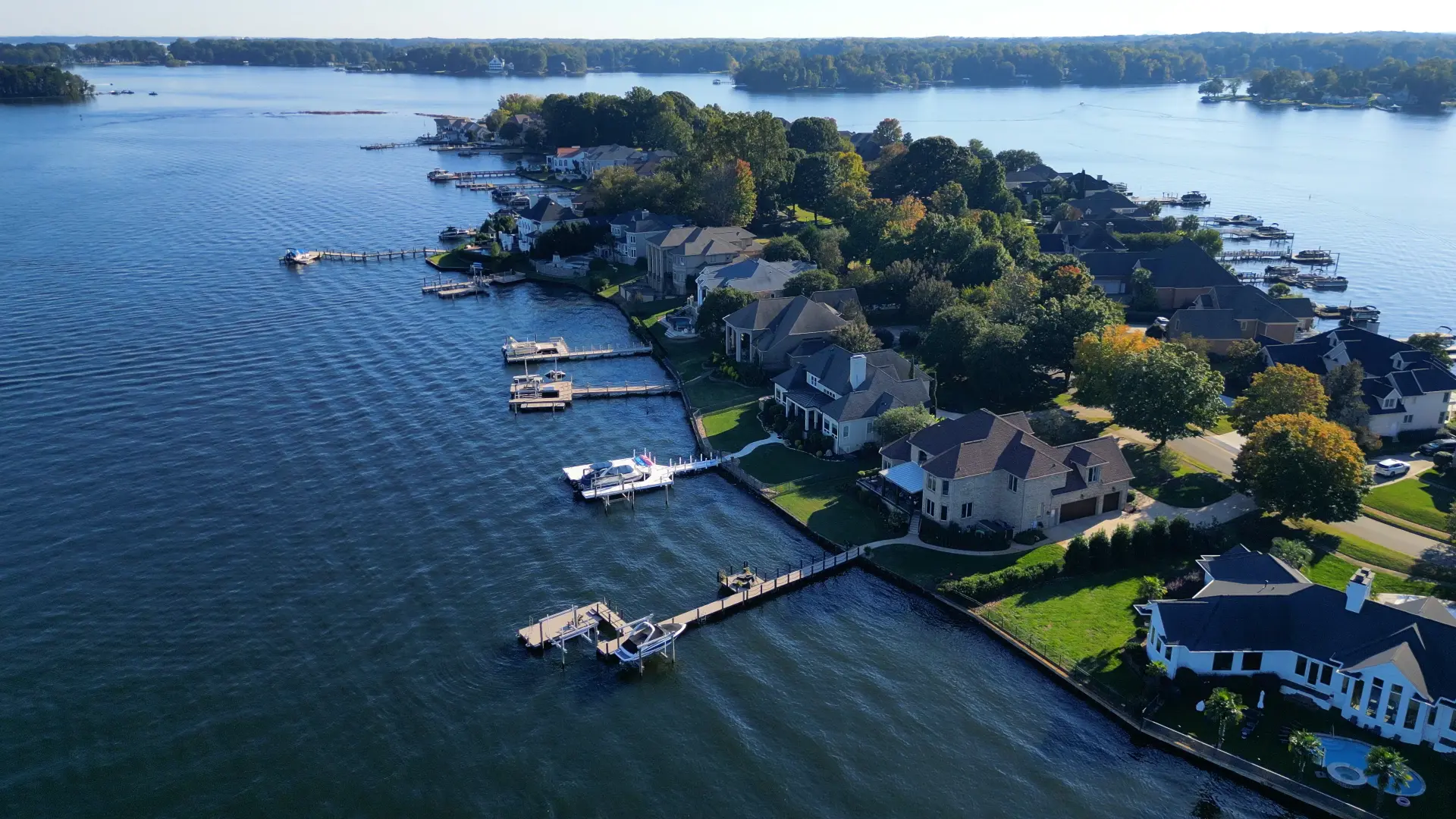
A dock in the photos is not proof it is permitted. Docks inside Duke Energy's project boundary need a Lake Use Permit, and permit status should be confirmed in writing during due diligence.
What is the difference between a deeded and a shared slip?
A deeded slip conveys with the property. A leased, licensed or community slip may carry fees, waitlists or transfer conditions set by an HOA or marina.
Do lake homes need flood insurance?
It depends on the lot. Check the property against FEMA's flood maps and get an insurance quote before your due diligence period ends.
Your due diligence checklist
Ask for the Duke Energy permit history for the dock, lift and any shoreline wall. Confirm whether the slip is deeded or shared, and read the HOA documents. Check the lot on FEMA's flood map and get insurance quotes early. Many lake homes run on a private well and septic, so order those inspections too. Then check water depth at the dock in person.
Reading a listing
Canopy MLS records waterfront features, and this site sorts homes into waterfront, water access and off-water from those fields. The terms below explain each.
- Waterfront
- The listing itself names a private, on-site shoreline structure or feature — a dock, pier, boat lift, boat house, private beach or shoreline retaining wall. The home sits on the water.
- Water access
- The listing names shared or off-site access instead: a community boat slip, community pier or ramp, a leased or licensed slip, a paddlesport launch, or a deeded slip that is off the property. Access is real, but it is governed by an HOA, a lease or a marina agreement rather than by the deed to the lot.
- Off-water
- No waterfront feature is recorded on the listing. These homes are in the same towns and often the same subdivisions, and they are the majority of the inventory around the lake.
- Cove versus main channel
- Two things that vary lot by lot and are worth confirming on site: usable water depth at your shoreline at lower water levels, and how open the water is in front of you. Neither is reliably recorded in the MLS, so we check them in person rather than quoting a figure.
- Deeded versus shared slip
- A deeded slip conveys with the property. A leased, licensed or community slip does not convey the same way and may carry annual fees, waitlists or transfer conditions. The distinction is in the documents, not the photographs.
Shoreline rules from Duke Energy
Lake Norman is a Duke Energy reservoir in the Catawba-Wateree river system. Shoreline activity inside the project boundary is governed by Duke Energy's Catawba-Wateree Shoreline Management Plan, not by the town or county alone.
Duke Energy — Catawba-Wateree Shoreline Management PlanBuilding, replacing or modifying a pier, dock or boat lift, and stabilising or excavating shoreline inside the project boundary, requires a Duke Energy Lake Use Permit before work starts. Existing structures are not automatically transferable assumptions — permit status is something to confirm in writing during due diligence.
Duke Energy — Permits for shoreline activitiesPermit categories, application steps and the shoreline classifications that determine what is allowed on a given stretch of bank are published by Duke Energy Lake Services. A listing's marketing remarks are not a permit.
Duke Energy — Permits FAQMore of the guide
- Boating & water life — Marinas, public boat access, boater rules and lake levels.
- Commute & getting around — I-77, the express lanes and drive distances we can source.
- Property taxes & costs — County tax rates around the lake and the other costs to plan for.
- Parks, golf & things to do — Parks, golf clubs, landmarks and town centers around the lake.
- Lake Norman homes for sale